


There are efficient systems, and then there are systems so well thought through that they feel almost invisible.
Most airports are designed to simply function
They move people, process flights, and handle volume at scale. As long as systems hold up and delays are within reason, the experience is considered acceptable.
But Changi Airport was never built to be merely acceptable. From the outset, it reflected a different kind of thinking, one that questioned what had long been taken for granted in airport design.
In the 1970s, Singapore already had Paya Lebar Airport
Expanding it would have been the obvious path. It was cheaper, faster, and far less risky. Instead, the government made a bold decision to build an entirely new airport at Changi, reclaiming land, relocating communities, and investing heavily before demand fully justified it.
A key figure in delivering this vision was Lim Kim San, then Minister for Communications. He was not an aviation specialist, but he had already proven his ability to execute large, complex projects, most notably in tackling Singapore’s housing crisis. What he brought was not technical expertise, but decisiveness and an uncompromising approach to execution.
That decision to build from scratch changed everything. Because it meant designing for what the experience should be, not just what infrastructure allowed.
The 7-minute baggage challenge
One of the clearest examples is baggage handling. In most airports, waiting for luggage is accepted as an unavoidable consequence of scale and complexity.
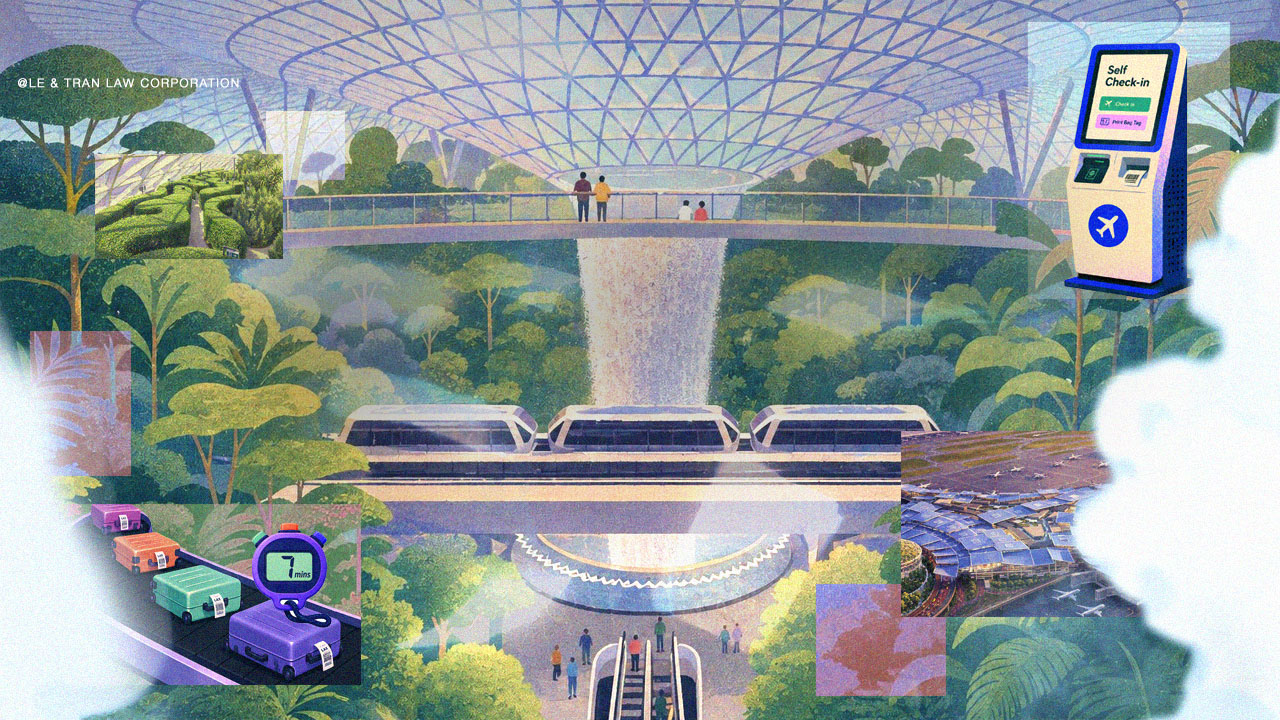
But early on that assumption was challenged, and Changi set a standard that would have sounded unrealistic at the time: to have the first bag on the belt within 7 minutes of aircraft arrival.
The difficulty was not technology, but fragmentation
Baggage handling sits at the intersection of airlines, ground handlers, airport operations, and logistics teams, each working to its own timeline and priorities. Aligning them to move as one was the real hurdle.
At that level, even small delays compound quickly. A late start on unloading, a misaligned transfer, or a poorly timed belt allocation can cascade into long waiting times. Eliminating that friction required not just faster processes, but a complete rethinking of coordination.
What was once considered unthinkable became standard
This was eventually made possible not by a single breakthrough, but by disciplined coordination across multiple moving parts. It made everyone come together.
This is the essence of visionary thinking. It starts by asking different questions and figuring out why those constraints even exist in the first place.
That same mindset can be seen across the airport
Changi invested early in natural light, greenery, and passenger comfort at a time when most airports were purely functional.
It introduced decentralised security screening and early self-service check-in to reduce bottlenecks, and built capacity ahead of demand, giving itself space to design rather than react.
None of this is accidental
Changi’s success is not built on isolated excellence, but on coordinated excellence. And that kind of coordination does not happen without vision.
Lee Kuan Yew saw what others could not yet see, and had the conviction to move toward it even when the destination was not fully understood.
Lim Kim San ensured that vision did not remain an idea, bringing the discipline and coordination needed to turn it into reality.
Visionary thinking is not just about the ability to dream up big and bold ideas, it is about having the conviction to challenge what others accept, and the discipline to align people, systems, and decisions around a higher standard over time.
The result is not just an efficient airport, it is an experience that quietly resets what people expect, even if they cannot fully explain why. Now, what do you see that others can’t?
Sincerely,